Published on: 16.9.2021
Information produced by Finnish Environment Institute
What is sustainable waterborne transport like?
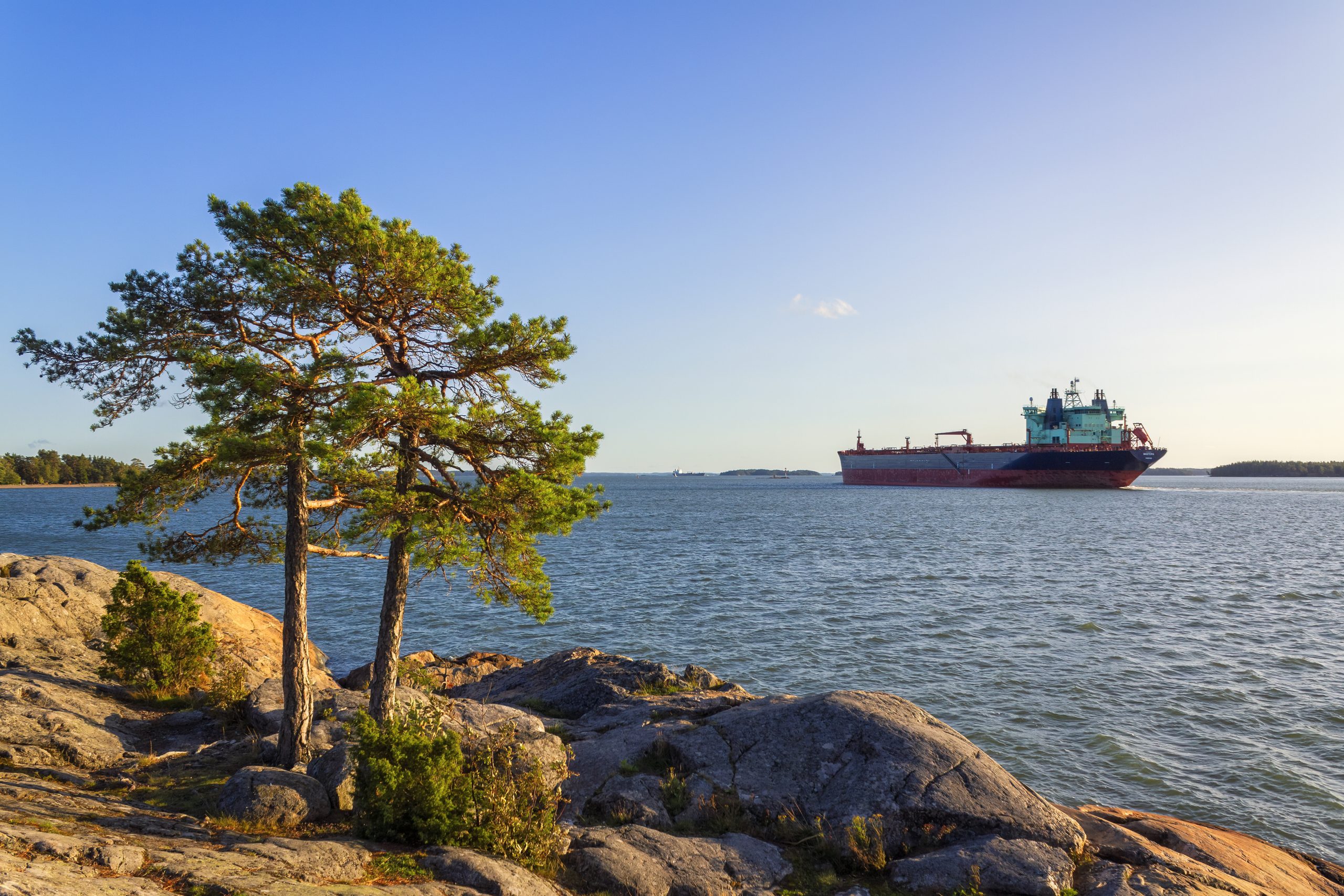
In waterborne transport, the key issue is ensuring that neither human lives nor the wellbeing of the environment are put at risk. The worst-case scenario for the environment would be an oil tanker accident followed by a large oil spill.
As the Baltic Sea is a busy shipping route, the risk of an oil spill is high. Every year tens of thousands of vessels, almost one quarter of which are tankers, sail through the Gulf of Finland and cross paths with ships operating between Finland and Estonia. Such intersecting shipping lanes add to the risk of a collision.
The oil catastrophe risk is minimised using various means. Maritime traffic is monitored by the Fintraffic Vessel Traffic Service, one of the most efficient systems in the world. Vessel safety is also regulated under Finnish legislation and international law. Finland maintains preparedness, fleet and equipment for oil spill response, which are also needed in case of minor oil spills. The number of oil spills has reduced clearly in recent years.
Such legislation as the EU Sulphur Directive has tackled other environmental harms caused by shipping and considerably reduced sulphur emissions from vessels into air. Efforts to reduce greenhouse gas emissions from vessels are also on-going. Other challenges include underwater noise pollution created by vessels and shore erosion caused by their wakes, in addition to which waterborne transport can also spread alien species.
All waterborne transport is regulated under the Water Traffic Act to ensure that shipping and boating are safe and responsible. Sustainability is the aim in both commercial shipping and pleasure boating.
Image: © Janne-Petteri Kumpulainen, Vastavalo