Published on: 3.6.2022
Information produced by Finnish Environment Institute
What goes on in the world of fish?
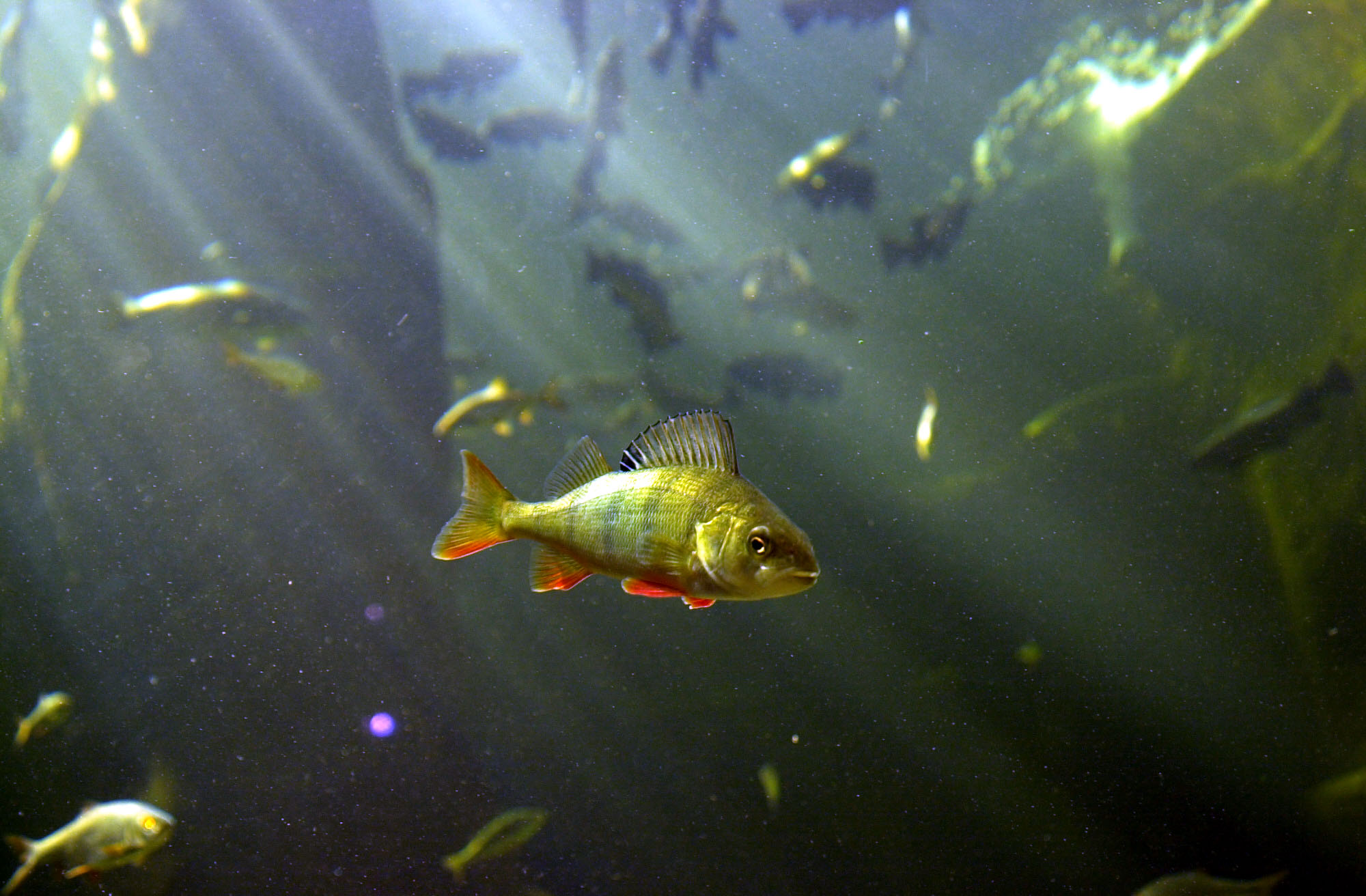
A fish depends on the lake or river in which it lives. An ideal water body offers stable conditions but also different habitats and food sources for various life stages. This can be a challenging equation.
Some fifty fish species live in Finland’s inland waters, or slightly fewer if we exclude alien species. Some species can live happily in almost any types of waters, including the sea. One of them is the European perch, the most common fish species in Finland. Other species have stricter requirements. The grayling needs cool water with a high oxygen concentration, whereas the zander thrives in warmer and more nutrient-rich waters.
The water body must also provide suitable spawning grounds. Fish often spawn in shallow and sheltered places where the water warms up quickly in spring, while some species only spawn in streams. Each species also has its special requirements regarding the spawning substrate or medium. Some attach their eggs onto submerged plants and others lay them in a nest which they have dug in the gravel bed. The site must also be suitable for juveniles, which usually spend the initial period of their lives there. They need both shelter and access to their main food, zooplankton.
Good sites for spawning and juvenile fish can be few and far between. If they are lost, the fish population in the water body is at risk. The results are equally dire if the migration route to the spawning grounds is cut off by a dam or other similar structure. This has been the fate of most populations of migratory fish in Finland.
Eutrophication has changed the composition of fish species in many lakes and rivers. It benefits cyprinids, while the populations of more valuable fish decline. Food chain restoration can help correct serious imbalances in the structure of a fish stock. In addition to eutrophication, climate change is casting a shadow over the future of fish populations.
Image: © Riku Lumiaro, SYKE