Published on: 24.2.2022
Information produced by Finnish Environment Institute
Peat production is declining – what does this mean for waters?
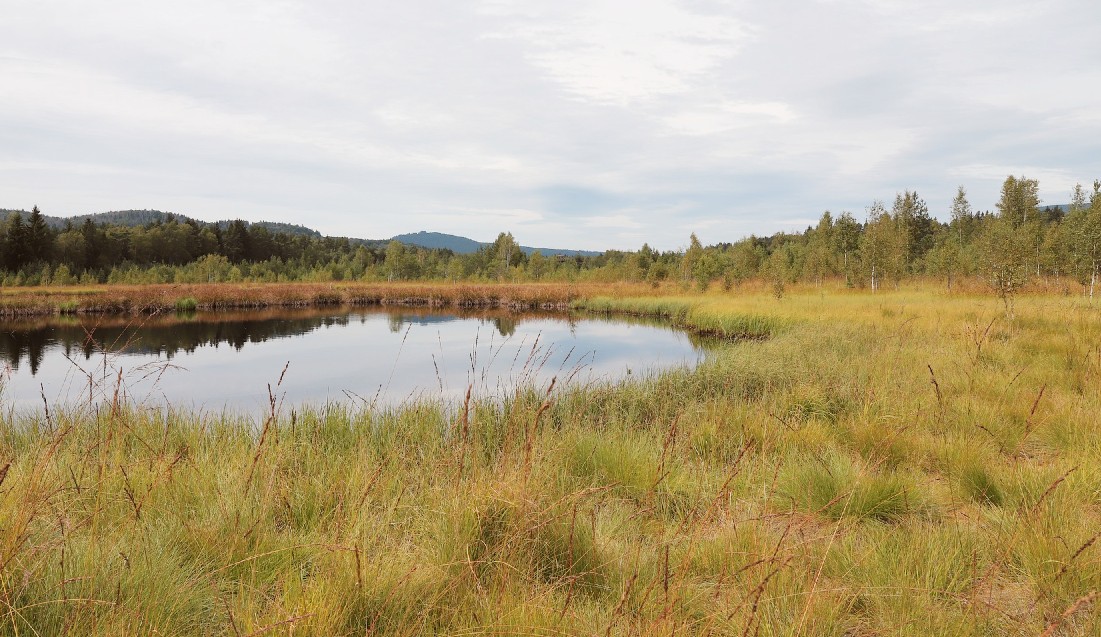
Finland has been one of the leading peat users in the world. At best, around seven per cent of the country’s energy needs were covered with peat. What has peat extraction meant for water bodies, and what will happen now that peat production is declining?
Peat extraction changes fundamentally the hydrological conditions of the area. The site must be drained for peat harvesting and it no longer retains and stores water. Any water falling from the sky runs quickly into drainage ditches and further into rivers and lakes.
Fast-moving flows of water may result in flooding downstream from the peat extraction site. This water also carries more solids, humus and nutrients than before because the site no longer has a plant cover to bind the soil and use up nutrients. Consequently, plenty of these substances are leached and washed away with the result that brooks become silted up. Downstream lakes are additionally subjected to eutrophication, and their waters may turn browner and more acidic.
The loading of water bodies caused by peat extraction is relatively minor on the national scale, or only about one per cent of all loading. It can have major local impacts, however.
Do the emissions stop when peat is no longer harvested? The answer depends on what happens on the site. Many former peat production sites have been planted with forest, but this will only succeed if ditches are maintained and the water table is kept below its natural level. Consequently, while adverse effects on streams and lakes may be mitigated, they will not be eliminated.
Some peat extraction sites are flooded and turned into bird habitats or other ponds. This means that the peat is submerged, and in the early years, it releases such large quantities of nutrients that the loading of water bodies may initially increase. It also takes a long time before the strongly acidic water becomes almost neutral again.
The mire can also be restored, and its natural vegetation can be regenerated. This is not always easy, as it may take decades before the situation stabilises and the vegetation recovers.
Image: © Pixabay