Published on: 17.9.2021
Information produced by Finnish Environment Institute
Is industrial pollution still contaminating waters?
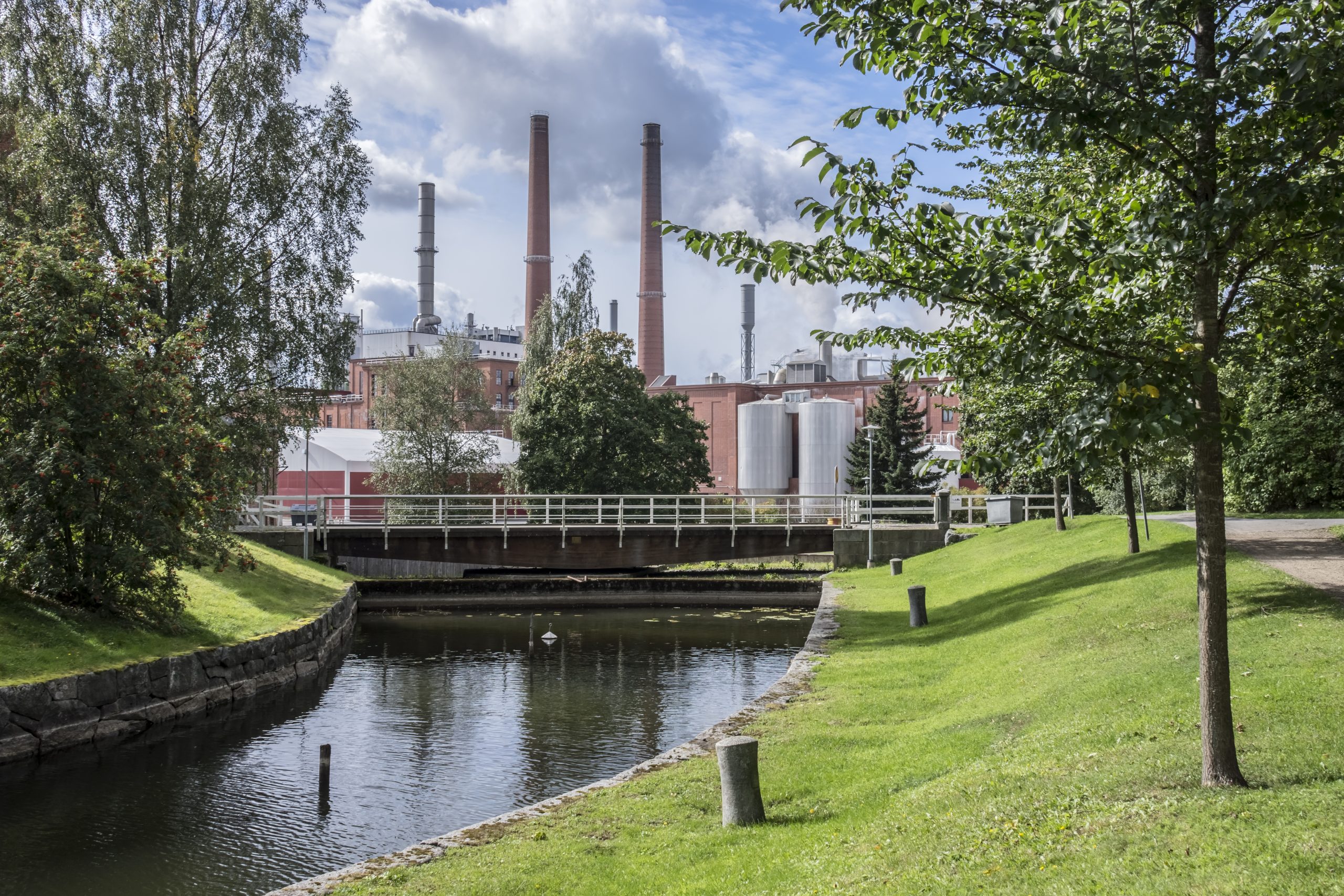
Industrial wastewater emissions are subject to stringent regulation and monitoring. Different industries have also made major investments in water protection. Are factories still polluting Finnish waters?
Older people remember times when the waters around many pulp mills were in poor condition. Tangles of fibrous material floated on the surface, the water had a bad smell, and fish either died or moved elsewhere.
Pollution caused by the forest industry peaked in the 1970s. In later decades, the industry started sharpening its focus on wastewater treatment and production technologies that reduced emissions. The results quickly became visible: emissions of solids and oxygen-consuming substances dropped sharply, and those of persistent organic pollutants and nutrients at a slightly slower pace.
Out of all industrial sectors, however, the forest industry is still the overwhelmingly largest source of emissions into waters. Around 90% of the phosphorus loading and 70% of the nitrogen loading from Finnish industries is generated by the pulp and paper industry.
While industry no longer is a significant polluter of waters at the national level, individual plants can still have a significant impact on the waters around them. In addition to causing eutrophication, the plants may release harmful organic pollutants and metals into waters. Metal emissions are generated by mining and the metal industry, in particular. Expansion in mining operations has exacerbated local harms.
Image: © Jari Kurvinen, Vastavalo