Published on: 2.12.2019
Information produced by Finnish Environment Institute
Fluctuating water levels
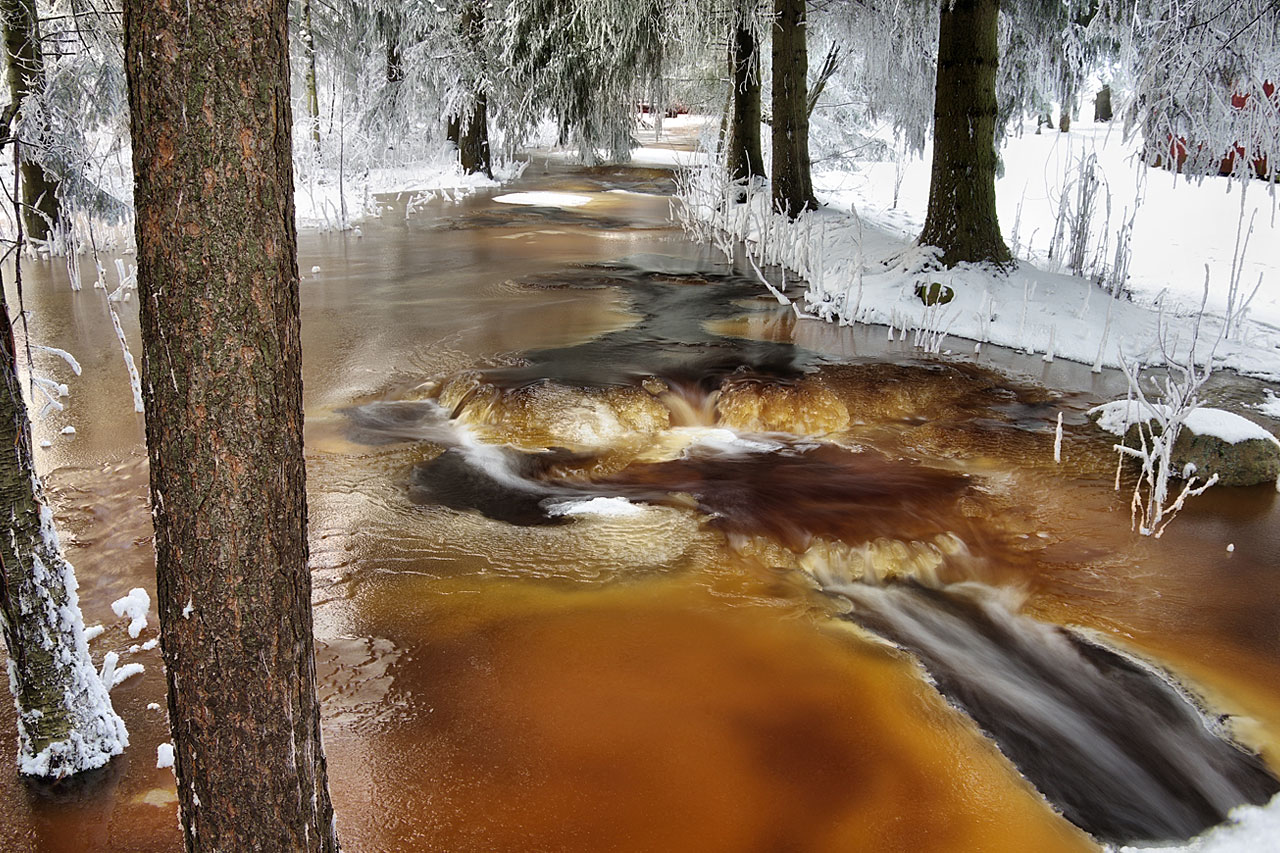
Fed by melting snow, a river becomes a torrent in spring. In late summer the same river may look tame and quiet but be whipped up into a fury again if it rains heavily.
The same fluctuations can be seen in lakes with a delay. It may take months before spring meltwaters make their way into the lakes in the lower reaches of a river basin and raise their water levels. In southern parts of Lake Saimaa, for instance, the maximum water level is usually only reached in late July or early August.
In the sub-zero temperatures of winter, the hydrological situation is more or less stagnant. The water is not replenished, nor does it evaporate from lakes and rivers tucked under an ice cover. They, too, appear to be hibernating and only waiting for the influx of water in spring.
Weather conditions also affect the water level and flow rate. In a dry summer, lakes lose more water than they gain, which causes the water surface to drop. If winter has brought plenty of snow and spring comes suddenly, on the other hand, rivers may fill up quickly and break their banks.
Changes in the water and snow situation can be predicted. The Finnish Environment Institute has a system of hydrological river basin models that covers the whole country and can be used to forecast water levels and flow rates.
Image: © Arimo Eklund, Vastavalo